
How to Work With a Game Artist on Your Indie Project (Without Making Them a Service Desk)
Working with a game artist on your indie project? Bring them in at vertical slice, get terms in writing, run one weekly feedback session, keep them.
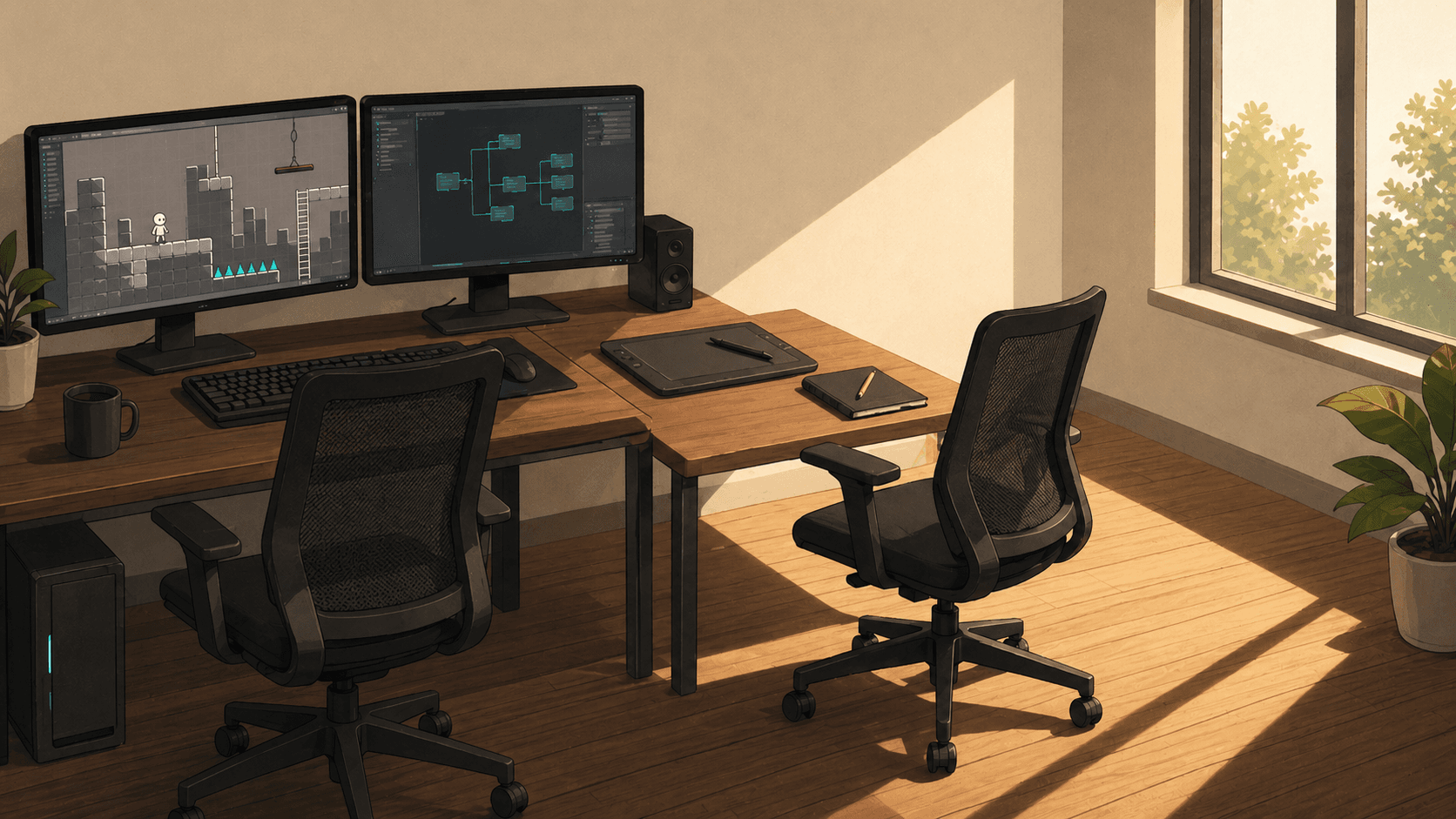
Most indie devs bring an artist in at week 30. That is the part that kills the project. You have built the game, you have built the tech, and now you need a sprite sheet by Friday, and the artist you scrambled to hire treats the work like a ticket queue. Because that is exactly what you have made it.
By the end of this post, you will know when to bring an artist onto your indie game, what to put in writing before the first pixel, and how to run the feedback loop so nobody rage-quits in month two.
Before you start
Four things before you message a single portfolio. Without them, you waste the artist's time and your money.
- A vertical slice, or at least a credible plan for one. Something the artist can play or look at. "The world I have in my head" does not count.
- A real budget in real money, even small. If you cannot put a small first-test fee on the table, you do not have a project. You have a wishlist.
- One shared doc with style references, target platform, and delivery format specs. Not a mood board dumped in Discord. One doc, one link, one source of truth.
- Acceptance that your first brief is going to be wrong. The artist will push back, and you will learn things you did not know you did not know. That is the whole point.
1. Bring them in at the vertical slice, not the polish pass
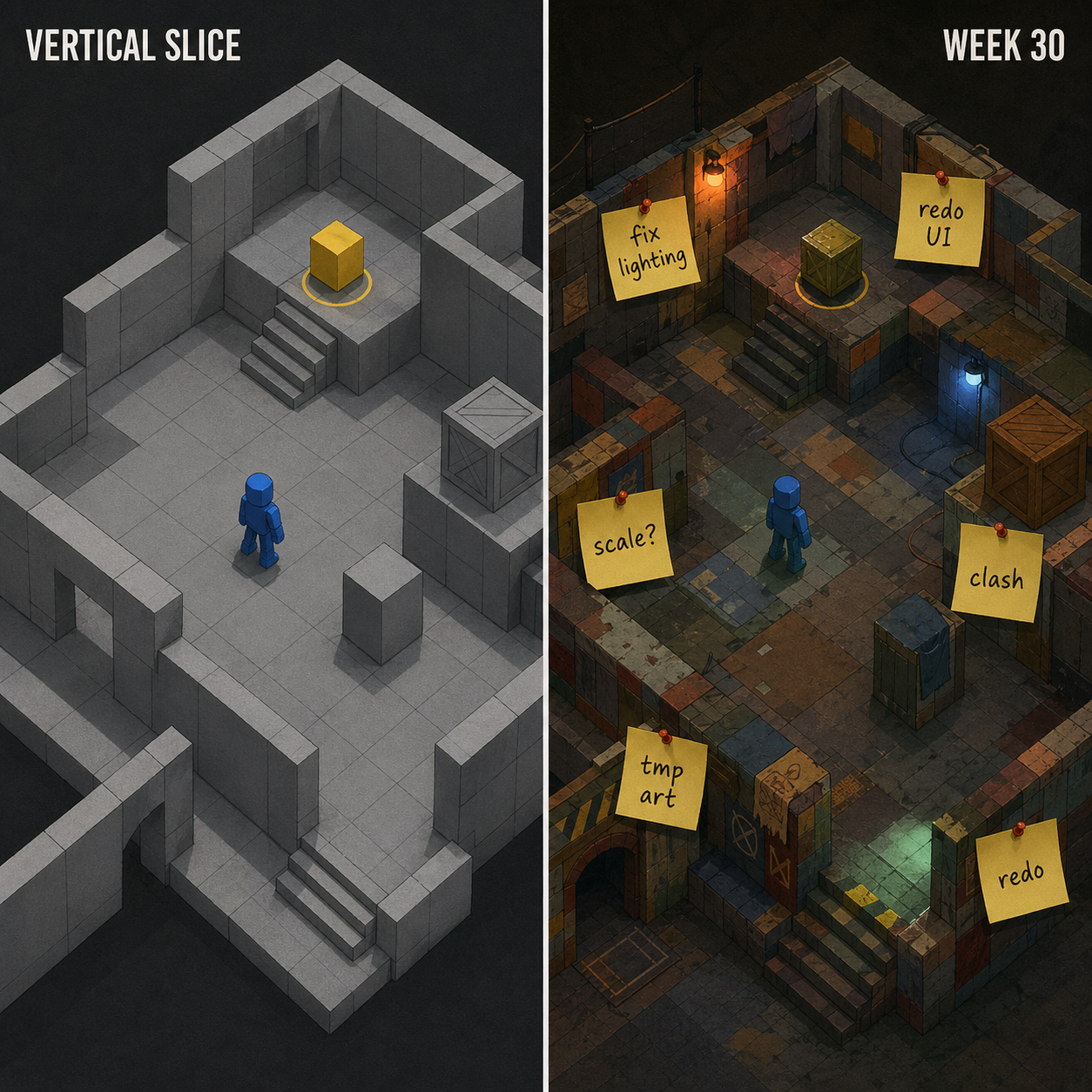
The failure pattern is brutal and common. You build the whole game with placeholder art, hit alpha, realize it looks like a homework assignment, then panic-hire an artist at month nine to "make it look good."
That artist inherits two years of accumulated style debt. Every sprite has to match a visual direction that was never designed. Every asset has to read against a UI that was already locked. They cannot propose a look. They can only patch the one you already committed to.
Tooth and Tail ran on inconsistent, dull art for around two years before the team brought in art direction. That decision forced a ten-month emergency rebuild, described by Adam DeGrandis at GDC. Ten months.
When you bring an artist in at vertical slice, they get to shape the world. They push back on mechanics that do not read visually. They spot readability problems before you code around them. That is creative partnership. The week-30 version is damage control in a trench coat.
Watch for: the phrase "just make it look nice." If you are saying that, you are already too late.
2. Put the terms in writing before the first pixel
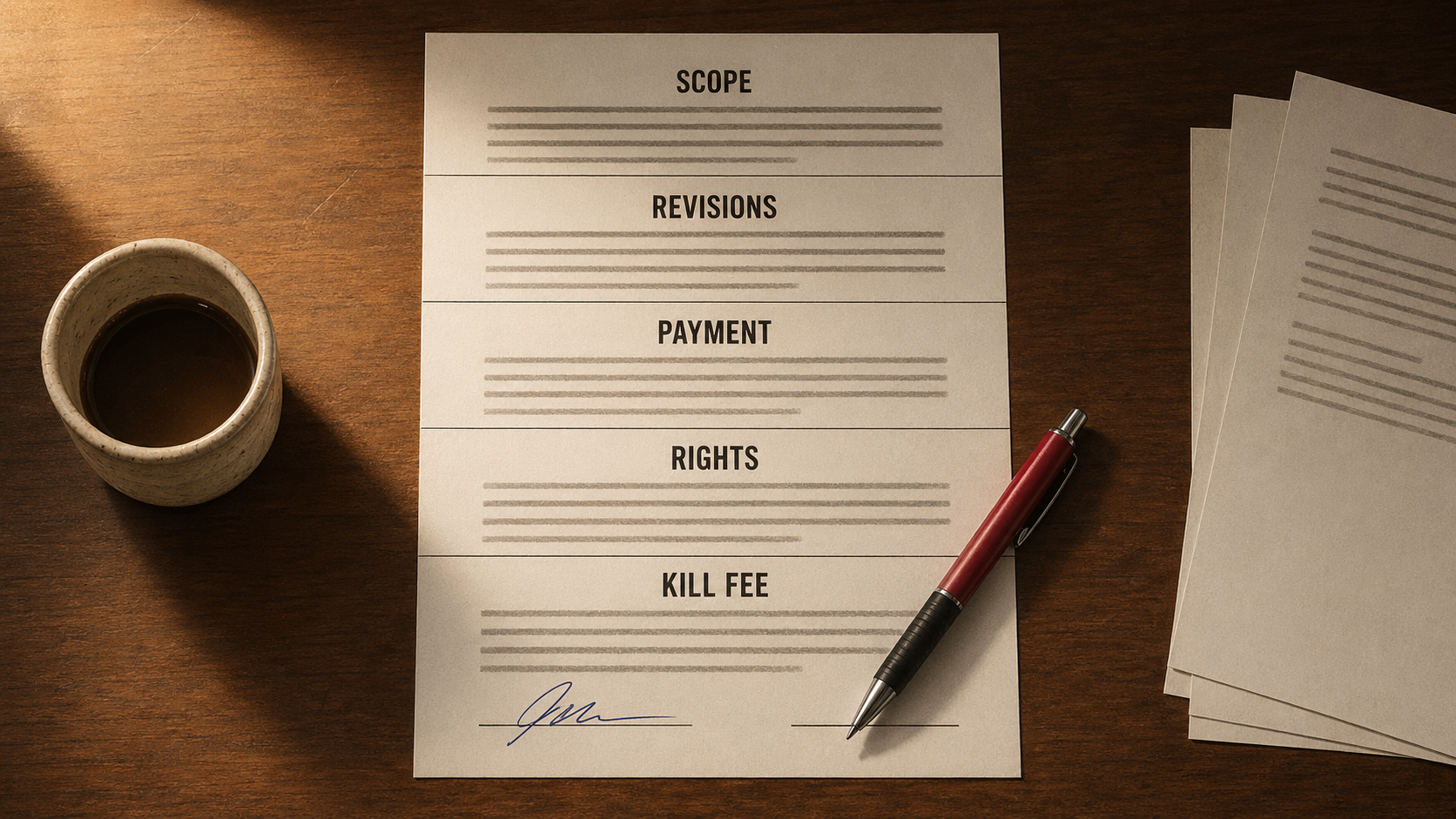
The conversation you are avoiding is the one that saves the project. Before the artist opens a single file, you need a short written agreement. Not a lawyer contract. A one-pager, shared doc, both signed.
It covers:
- Scope. What exactly is being made. Number of assets, dimensions, formats, file deliverables. "A boss sprite" is not scope. "One boss sprite, 256x256, PNG with layers, idle plus three attack animations at 12 frames each" is scope.
- Revision cap. Two revisions per asset is the industry shorthand. "Several" is not a revision cap. "Several" is a fight.
- Payment. Split payments work. 50% on contract, 50% on delivery, or milestone-based for bigger jobs. Not deferred. Not "when the game sells."
- Rights. Who owns the work, who can use it for portfolios, what happens to the assets if the project dies, what happens to the assets if the artist leaves.
- Kill fee. If you cancel the project before delivery, what they get.
If you have never done this before, the "rights" line alone is why you are reading this post. Your artist cannot show unfinished, unreleased work on ArtStation without hitting legal gray zones. Shipped credits or nothing. Lock the portfolio rights in writing. We walk through that in game-artist-portfolio-graveyard.
3. Pay the artist, even if it is small
John at LostRelicGames, on the mistakes he made early: "Anyone with a specialized skill should typically be treated as a contractor that is compensated for their time." He adds: "artists are pretty sick of being promised revenue share for indie games that never get finished."
Rev-share is not a neutral swap for payment. Rami Ismail's guidance for indie hires: upfront beats post-recoup beats pre-recoup, in that order. Most games underperform projections. Guaranteed money is the only safe compensation.
There is also a creative-control price. Mark Jessup, writing in Game Developer: "When you ask talented professionals to work for free, you'll probably have to give up a certain degree of creative control." Rev-only projects do not have a lead. They have partners. That is fine if that is what you want. It is a disaster if you thought you were the director.
If your total budget is small, hire for three hours of concept work, not three months of assets. Small money, real money.
Watch for: the phrase "this could make us both rich." If it is in the pitch, the trap is closing.
4. Write a brief they can say "no" to
Tim Ruswick puts the problem plainly: "Really understanding what you want I think is the first problem. Most people don't know what they want."
The test is not whether your brief is detailed. It is whether the artist can read it and tell you it is dumb. A brief they can only say "yes" to is a brief that turns them into a service desk.
Your one-pager brief needs four blocks:
- What the thing is. Function, not adjectives. "Enemy that telegraphs a wind-up before attacking" beats "cool boss."
- Three references. Good refs and bad refs. Tell them why each one is in or out.
- Constraints. Palette, pixel count, platform, tone.
- An explicit "tell me if this is dumb" clause. In writing. Not implied.
Vet portfolios before you send. LostRelicGames warns: "Buyer beware on fiverr where I've got a feeling that a lot of these artists are, I don't say falsifying, but maybe embellishing their portfolios." Reverse-image-search a few pieces before you message.
5. One feedback session per week, not rolling Slack comments
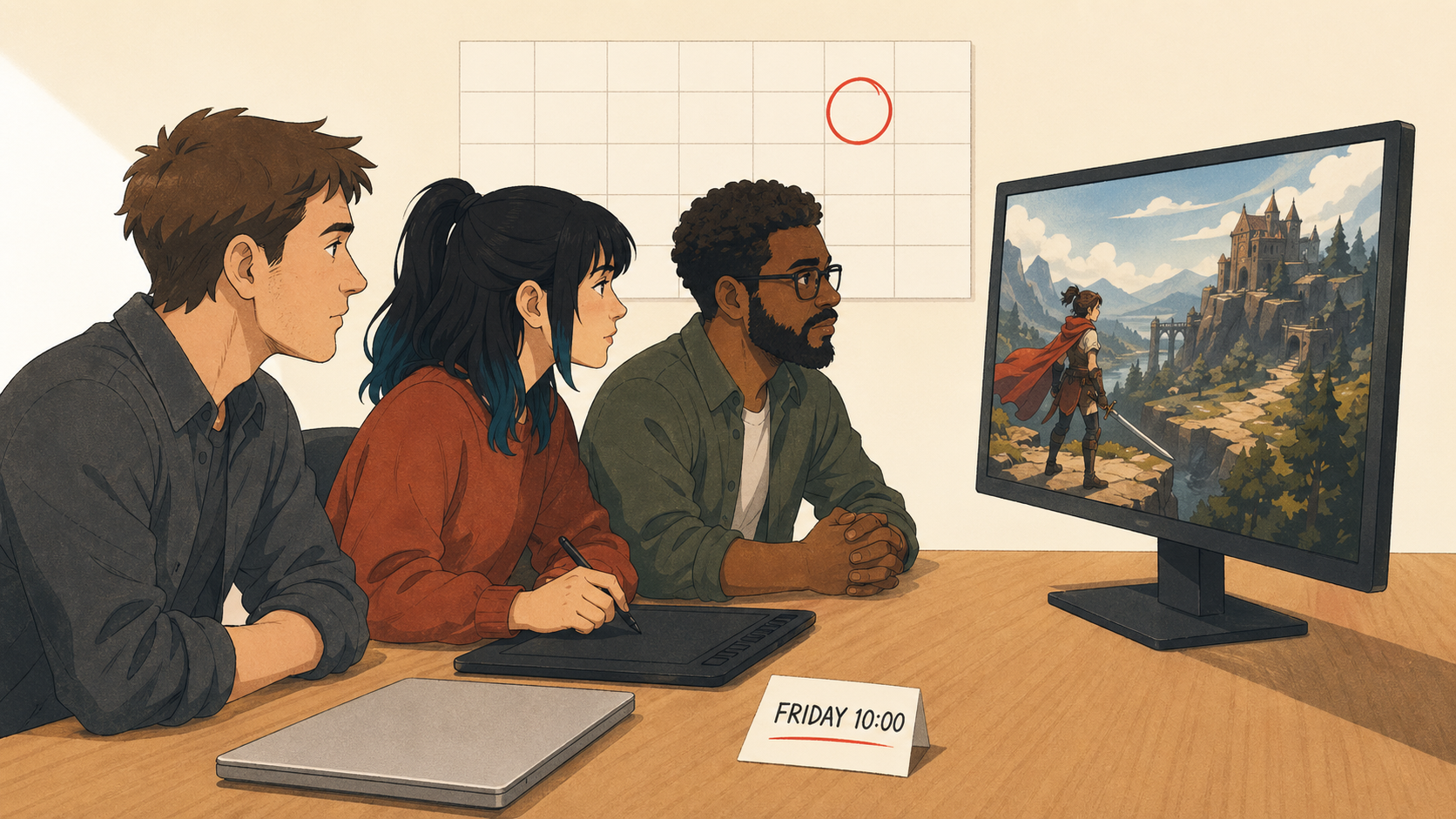
Every Slack ping is a context switch. Every context switch eats the artist's work.
The structural fix is simple. One feedback session per week, scheduled, with one decision-maker present. Write feedback in advance, paste it in the session. No "oh and also" from a third team member. No DMs in between.
Hannah George, writing in Game Developer in 2024, describes a structured-feedback model at a remote art outsourcing studio that has held retention above 99 percent over five years. Structured feedback is not bureaucracy. It is the thing that keeps your artist from ghosting you in month three.
Watch for: when you want to ping them about something small, ask yourself if it can wait seven days. If yes, write it down and bring it to the session.
6. Treat them as a creative partner in playtests and world-building
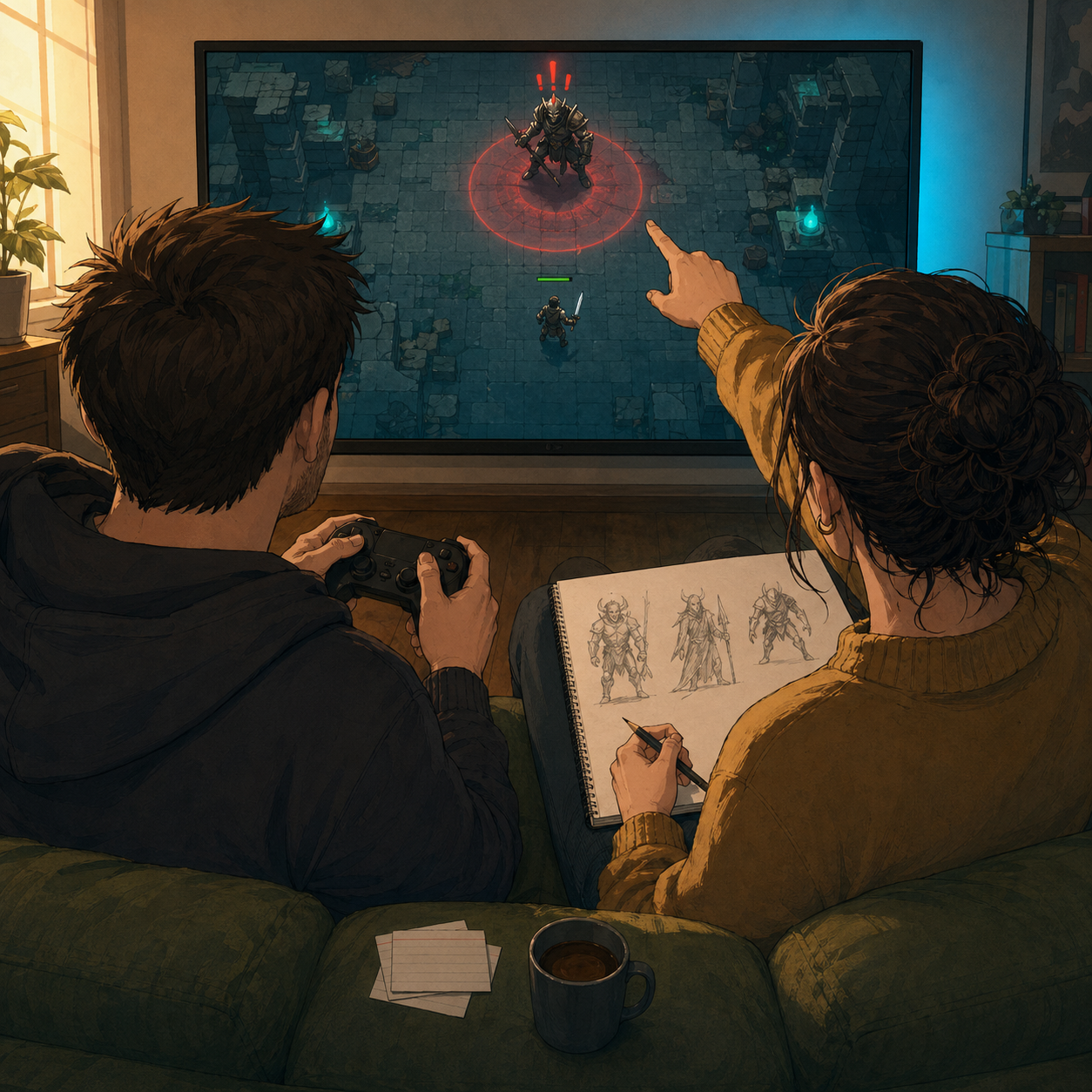
This is the fix to the service-desk problem.
The artist who shows up every Friday to the playtest will spot readability issues you never would. They will see the palette drift. They will notice that your enemy telegraph does not actually telegraph. They will ask about your game's narrative tone, and you will realize you never defined it.
John at LostRelicGames describes what this looks like when it goes right: "Eten is the art director for that game and he spent some time with me telling me about my mistakes and educating me. This was so valuable to me because I had so many misconceptions about how animation should work and importantly the workflow."
That is not a vendor relationship. That is a teammate who has your back. Invite them to the world-building call in week two. Invite them to the publisher pitch review. Make them a partner, and they will act like one.
7. Onboard like they are staying
Even if the contract is four assets, onboard as if the relationship is long-term. Write the style bible. Share the tool access. Keep a decision log. Document the feedback cadence.
This sounds like overkill for a small job. It is the opposite. When the artist you hired for four assets turns out to be great, you want the option to keep going. That option only exists if the groundwork is there.
Carlos Estigarribia, interviewed on 80.lv, argues that short-term art assignments do not save money, because alignment eats the savings. Longer collaborations are where both sides win. John at LostRelicGames spent two years sitting next to an art director at a boutique ad agency before he could direct artists himself. That proximity was the investment.
Give your artist onboarding even on a four-asset contract. It is the cheapest thing you will do all project.
Common pitfalls
The hidden ticket queue. You said you wanted a creative partner. You also ping them three times a day in Slack for small asset requests. They are now a ticket queue. Pick one.
The "revisions are free" trap. Every revision past your cap should be paid. If you did not cap revisions, you are going to lose the artist to burnout or resentment. Usually both.
Fiverr without portfolio vetting. The LostRelicGames warning stands. Embellished portfolios are common. Reverse-image-search. Ask for process shots or unfinished work. If they cannot show you a work-in-progress, that is your answer.
Aligning on style at "pass 2." If you have not agreed on palette, silhouette, and readability by the second review, you are about to eat the Tooth and Tail rebuild.
Offering rev-share to dodge the budget conversation. If you do not have money, do not promise future money. Scope smaller. Hire for concept work only. Ship a demo on placeholder art and raise. Do anything except promise revenue that does not exist.
What to do next
If you are at the "vetting portfolios" stage, read how-to-find-reliable-teammates-for-your-indie-game before you message anyone. If you are drafting the contract, read rev-share-red-flags first. If you have already hired an artist on a bad contract and you are worried about their portfolio after launch, game-artist-portfolio-graveyard walks through what to fix.
The common thread is structural, not moral. Your artist is not a service desk because you are a bad person. They are a service desk because the structure around them was designed for one. Change the structure, change the relationship.
Sign up for Clowdr to bring an artist onto your project as a creative partner from day one. Retained rights, a short written agreement, one weekly ritual where you are both counting on each other by Friday. You are not bad at working with artists. You have just been doing it alone.