
Your Game Art Portfolio Is a Graveyard. Here's How to Fix It.
Most of your paid game art is locked away forever. Three contract clauses turn your portfolio from a graveyard into shipped-games evidence.
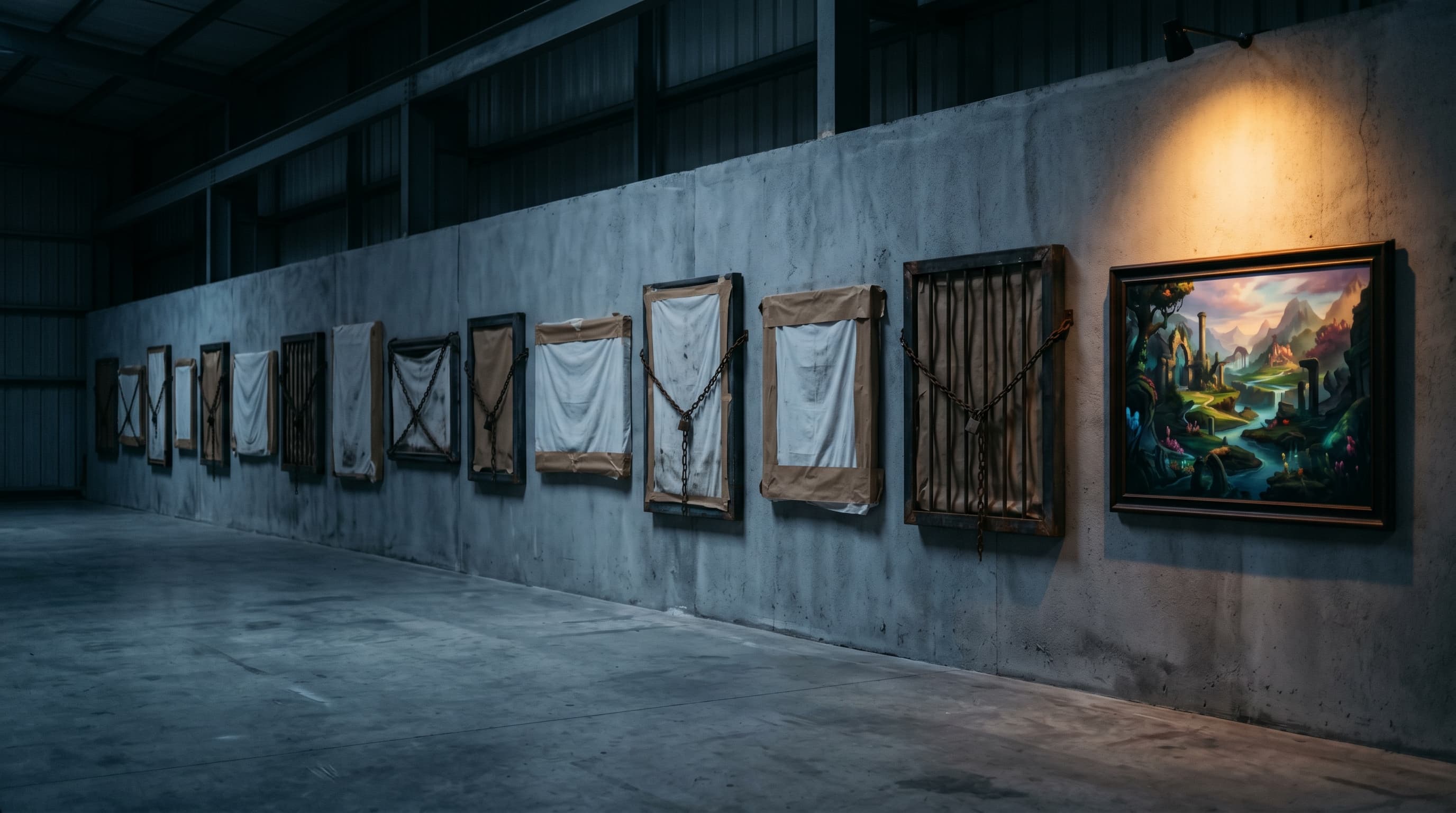
If you've been making game art professionally for more than a year, there's a good chance you can show less than 10% of what you've actually made. Cancelled projects. Perpetual NDAs. Studios that went silent. The work exists somewhere on a hard drive owned by someone else, and your public portfolio looks like a highlight reel of fan art and personal pieces. This guide is for game artists — 2D, 3D, concept, animation — who want their portfolio to show shipped games, not a graveyard of invisible contracts. It's not about curation. It's about the three contract clauses that decide whether your paid work gets to exist in public.
One note before we start. This isn't legal advice. Contract law varies by jurisdiction. Show your contracts to a lawyer before signing.
Who this is for
Burning Grinder energy, artist variant. You've done paid game work, you've signed NDAs, and at some point you watched a project you cared about go dark. Your ArtStation is 80% personal pieces because the paid stuff is buried under clauses you didn't fully read at the time.
If you're a hobbyist with five years of fan art, this post isn't for you. Your portfolio problem is different. If you're on your first paid gig and your contract is still on your desk, this post is exactly for you. Bookmark it, then open the PDF.
Why most game artist portfolios are 95% invisible
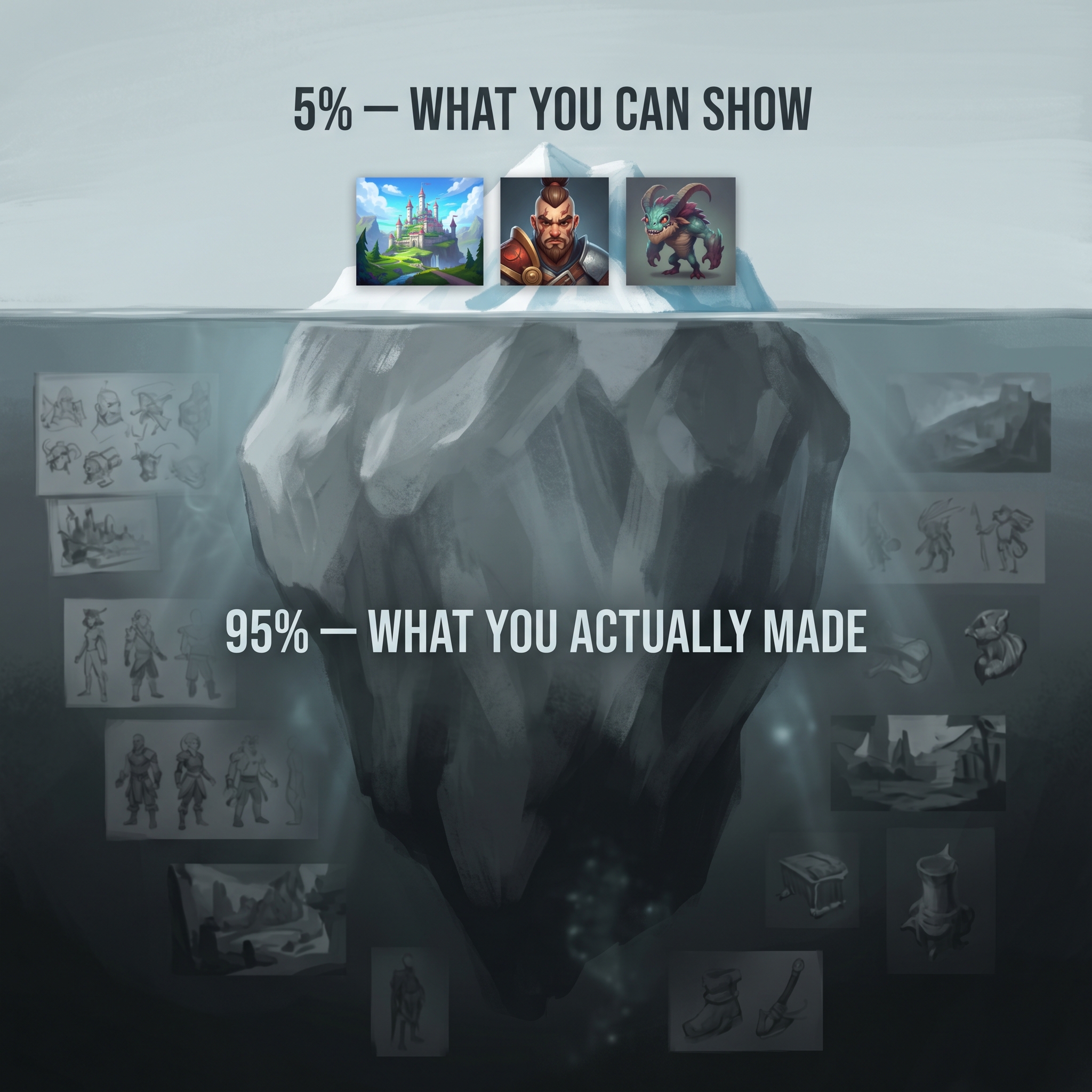
Artists interviewed in Aftermath's "Most Video Game Artwork Will Never Be Seen" report being able to show about 5% of their professional output in the last five years. One senior artist in the same piece says, "Over 90% of the studio work I've made over my career is locked away forever." Another: "Over my career I have worked on 12 projects but shipped only four titles and two pieces of DLC."
Those aren't outlier numbers. The layoff wave amplified the problem. GDC's 2026 State of the Game Industry survey found 28% of respondents were laid off in the previous two years. Embracer Group alone closed or divested 44 studios and cut roughly 80 game projects during the 2022–2025 restructuring. Each one of those projects had artists on it. Each one left paintings, models, rigs, UI, and concept work sitting on a server nobody is allowed to open.
From a Polycount thread on cancelled games: "My last company was very strict about what we could put in our portfolios so I also had nothing to show for it." And this one captures the resume problem: "How else are you suppose to show that gap in your employment between your last shipped game and your current application."
Reframe it. Portfolio carve-outs in NDAs exist. Game Developer's guide to NDAs in the games industry walks through the common pitfalls that make these contracts easy to oversign. Portfolio exceptions aren't on that pitfall list only because most artists never ask. Studios rarely offer them by default. You have to. Most artists don't.
The three things to get in writing before you do a single asset
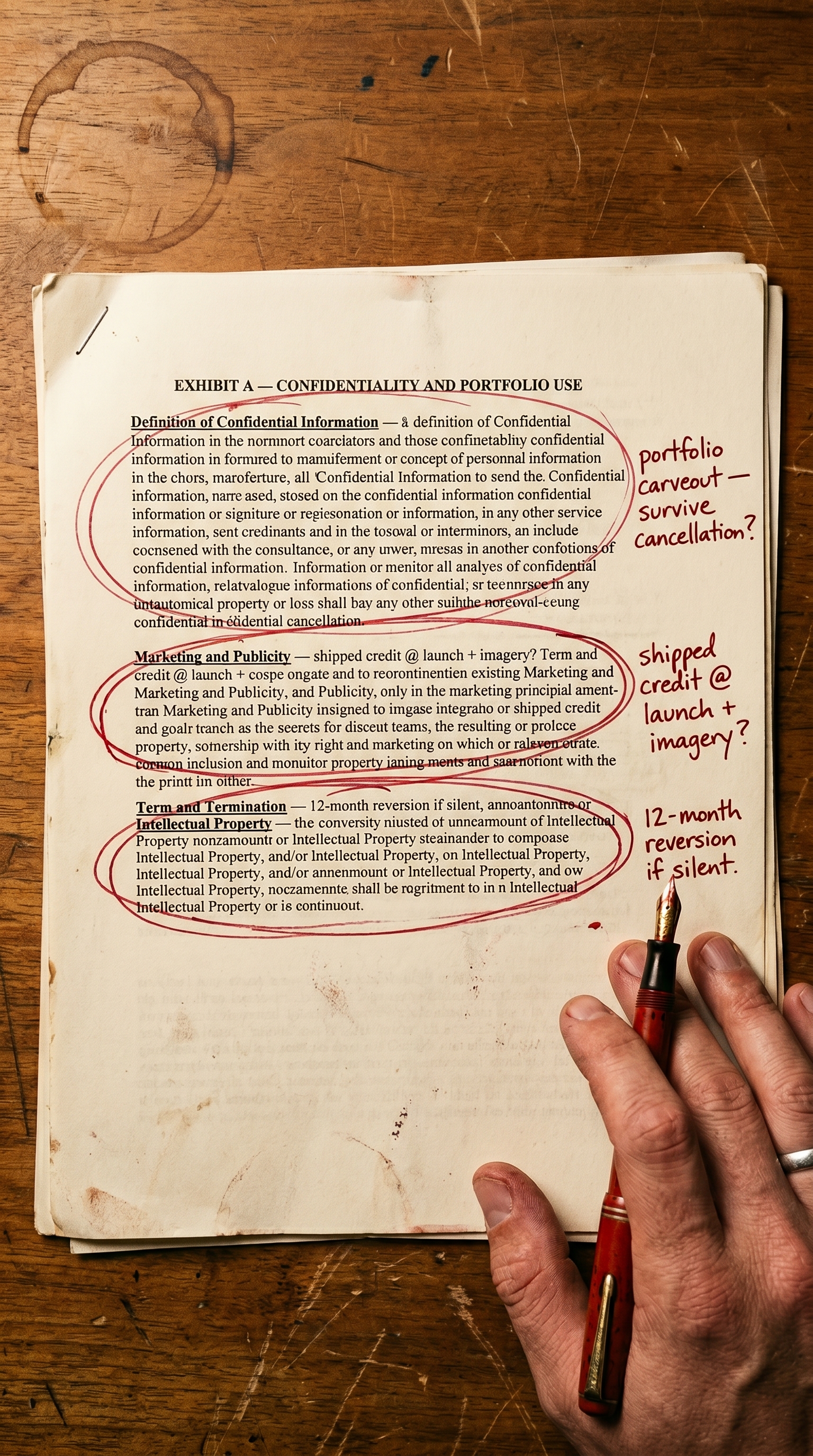
These are the clauses that decide whether your paid work exists in public.
1. A portfolio-use carveout that survives cancellation
The plain English version goes: "I can show this work publicly if the project is cancelled, goes unreleased, or has no public development activity for 12 months."
The anti-pattern is blanket perpetual confidentiality with no time-limit and no cancellation clause. You sign it, the project dies two years in, and you've just spent 700 hours on art nobody will ever see.
If they push back, ask for a time-limited version: "Confidential for 12 months after cancellation, then the craft layer becomes showable." Studios used to strict NDAs will often accept this because it still protects active IP. Most of the "we can't" responses turn into "we can" once you propose a specific number.
One artist in the Aftermath piece called it directly: "I think it's brazenly immoral to revoke portfolio usage rights from the artist for all time."
2. A shipped-credit clause that flips on at launch
Plain English version: "On public release, my name appears in the credits under [role] AND I receive written permission to list the title on my portfolio with studio-approved imagery within 30 days."
The anti-pattern is credit at the studio's discretion. Credit only if you're still employed. Credit in the end-roll but no portfolio-use rights on the imagery itself.
Here's why this matters. A credit you can't visually support is a credit reviewers assume is fake. This is the gap Luis hit in a portfolio review. He had real AAA dialogue credits on Ring Fit Adventure and Call of Duty but buried them at the bottom of his site while leading with redesigns of games he never worked on. The reviewer was blunt: "This totally skips over anything you have actually done. It's not in your demo reel, it's not in your bio that you're working currently, it's down here and someone might miss that." Swap the order, said the reviewer. The structural version of that advice is to sign contracts that make the order self-correcting, because the studio delivers you credit-plus-imagery together at launch instead of in two separate negotiations two years apart.
3. A reversion window if the project dies quietly
Plain English version: "If there is no public announcement, paid marketing activity, or build commit for 12 months, portfolio-use rights revert to me. I may publish stylized derivatives of my contributions with the studio's name redacted."
The anti-pattern reads "Rights revert at the studio's written consent." Translation: never. The lead vanishes. The Slack goes quiet. The legal email bounces. Your work is frozen because there's nobody left to sign a permission form.
If they push back, offer to keep the studio name redacted on reversion. You get to show the work. They get to say nothing public happened. Both sides are covered.
This is the clause that addresses what a sound designer captured in a portfolio review session, trying to show work from a studio that never released the project he'd been paid for: "I'm not going to break any NDA I'm pretty sure everything is closed… I might play the wrong file you know and break some NDA or something and no one wants that who wants that no one."
That's the emotional cost of a missing reversion clause. Even when the work is effectively abandoned, the artist is still auto-censoring two years later.
How to showcase work from games that never shipped (without breaking your NDA)
The five-page Google results for "game artist portfolio" agree on one thing: none of them cover this.
Get permission in writing before you think you need it. The moment the ink is dry on the NDA, email the art director with a one-sentence draft: "Confirming portfolio use rights under section X. I can show [piece types] publicly [under these conditions]." Get the reply. Save it. Three years from now when the studio is gone, that email is your only proof.
Show the craft layer, not the IP. Turntables of your modeling approach on a redesigned character that isn't theirs. Rig breakdowns using the same technique on a personal asset. Stylized derivatives. You're showing how you think, not what you made for them. This is the strongest move for paid work you can't name.
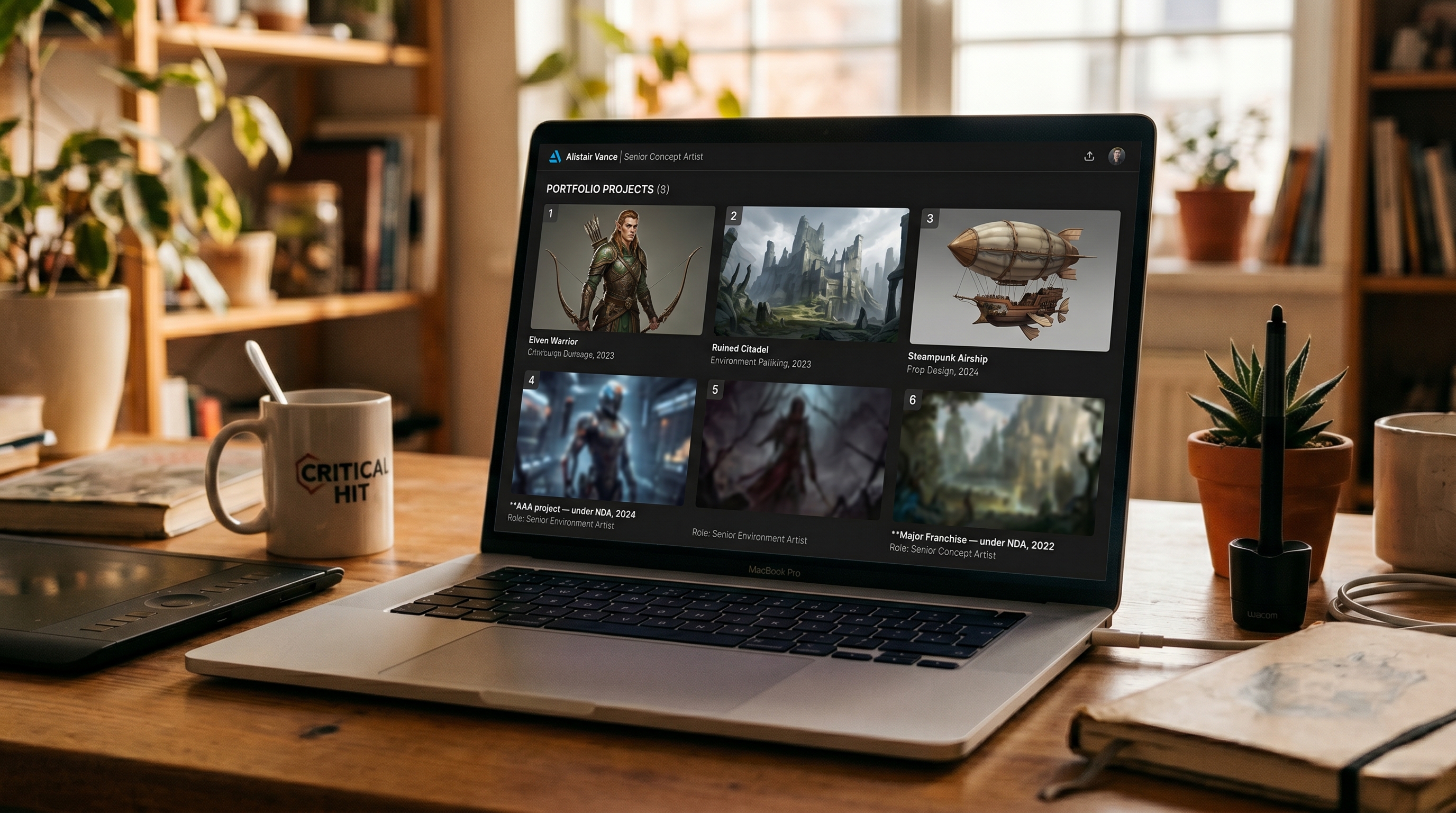
When imagery is blocked, go text-only. A one-line credit with role, year, and studio is better than a silent year. Recruiters understand NDAs. A blank gap is suspicious. A cited credit with "art assets under NDA" is not.
Say "under NDA" out loud. Artists in the Amanda Lynn Chartier piece on cancelled games describe how "the combo of layoff + strict NDA essentially wipes out years of a dev's experience." The fix is naming the gap. An artist who writes "2023–2024: Senior Environment Artist, AAA project currently unannounced" is trusted more than one who leaves 18 months blank.
Screenshot everything you legally can, when you can. Internal presentation slides you authored. Shipped in-engine screenshots from public builds. Marketing assets that made it to Twitter. The studio's own public posts are, by definition, no longer confidential. Archive them on your own drive the day they go up.
Why "brought in early" changes everything
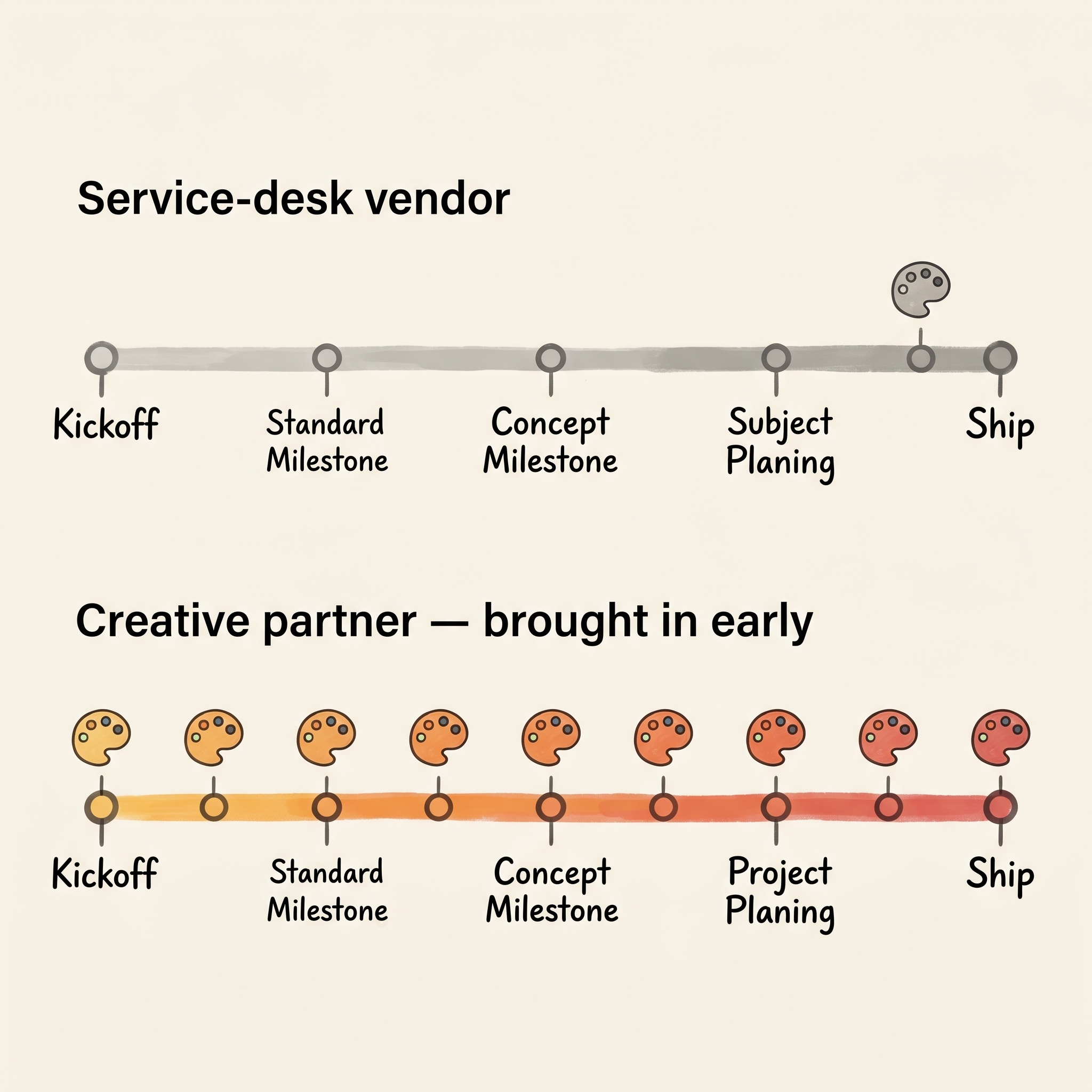
The pattern under all of this is structural.
Most artists enter projects as service-desk vendors. Asset A requested, asset A delivered, next. Under that model, the artist has no visibility into the ship decision, no place in the project credits, and no shared tooling history to prove contribution. When the project dies, the artist has nothing portable.
Artists brought in early as creative partners have a different outcome. They're in the credits from day one because their name is in the project docs. They have commit history in shared tooling that proves their asset list is real. They're in the room when the ship decision happens, so the contract language reflects them. The portfolio becomes cumulative.
This is the collaboration angle Clowdr is built around: brought in early, creative partner from day one, retained rights by default. If you're a solo dev reading this and wondering how to do right by the artists joining your project, the companion read is How to Find Reliable Teammates for Your Indie Game Project. If you're weighing whether to solo your next game or team up, Solo Dev vs. Team walks the tradeoff.
How Clowdr is built differently for artists
Three structural answers, baked in before you sign anything.
First, retained rights by default. Contributors keep IP to their own work. Contracts are in writing before the first asset ships. No perpetual confidentiality as the default setting.
Second, brought in early. Artists and composers onboard at project kickoff, not as last-minute vendors. Your name goes in the project documentation on day one, which means it's in the credits regardless of how the project ends.
Third, shared tooling as provable contribution. When the project ships or dies, your contribution history is portable. Commit logs, asset lists, and timeline records are yours. They're exportable. They're legitimate proof of work if a dispute comes up later.
That's the short version. Longer version lives in Why 90% of Indie Games Die in the Idea Phase, which diagnoses the structural isolation problem these three clauses answer.
How to try this in your project (this week)
Three concrete actions you can finish in under two hours.
-
Audit your last contract. Search the PDF for the word "portfolio." If it's not there, note which project and draft a short email to the studio requesting retroactive portfolio-use rights for shipped imagery. Many studios will say yes. Saying no costs them nothing. Saying yes costs them nothing either.
-
Write your 3-clause paragraph. Using the three clauses above, paste a short template into a notes file you'll use for every future indie contract. Three sentences is enough. You can print it on the back of a napkin and still win the negotiation.
-
Audit your current portfolio. For each paid piece, answer two questions. Is the studio still alive? Do you have written permission? If the answer to either is no, replace that piece with something you can show without anxiety, or move the credit into text-only format until you've got the clauses to back the imagery.
That's the week. Next month, start applying the three-clause paragraph to every new contract.
If you're tired of rebuilding this negotiation from scratch on every project and tired of watching your best work disappear into studios that go quiet, the structural version exists. Sign up for Clowdr. The platform is built so artists don't have to renegotiate these clauses every project. Retained rights. Early involvement. Shared tooling. A team, not a family.
Frequently asked questions
Why can't game artists show most of their professional work?
Two reasons. Perpetual NDAs that don't expire when a project ends, and cancelled projects that are never publicly announced. Artists interviewed in Aftermath's reporting say they can show about 5% of the last five years of paid work. Studios default to strict confidentiality because it protects IP for them. The cost is entirely on the artist's portfolio.
What contract clauses should a game artist negotiate to protect portfolio rights?
Three. First, a portfolio-use carveout that survives cancellation, so you can show the work if the project never releases. Second, a shipped-credit clause that flips on at launch, so you get named in the credits AND receive portfolio-use rights on studio-approved imagery within 30 days of release. Third, a reversion window if the project goes dark. If there's no announcement or build activity for 12 months, portfolio rights revert to you, with the studio's name redacted if needed.
Can I show work from a cancelled game without breaking my NDA?
Usually not without a carveout in the original contract. The legitimate workarounds are to show the craft layer in stylized derivatives, name the role without showing imagery, or wait for a reversion clause to trigger. A written permission email from the studio, even one sent years ago when the project was active, gives you legal cover if the studio later disappears.
How long do NDAs on cancelled game projects usually last?
Most default to perpetual. This is what Aftermath's reporting calls "brazenly immoral." The artist is bound for life over a project the public never heard of. Time-limited NDAs (12-month cancellation window, 2-year post-release) exist but have to be negotiated in. The starting language in most studio contracts is "in perpetuity" until you ask for something different.
What should a game artist do if the studio disappears before approving portfolio use?
This is why the reversion clause matters. If no announcement, no build activity, and no paid marketing for 12 months, portfolio rights revert to you. Without the clause, you're stuck. There's nobody left to sign permission and the default is silence. With the clause, you can publish after the trigger, with the studio name redacted if the contract requires it.
How do I list cancelled or unshipped game credits on a portfolio legitimately?
Name the role, year, and studio. Add "project unannounced" or "under NDA" as the status. Recruiters strongly prefer a cited credit with a confidentiality tag to a blank gap in your work history. If you have screenshots of your own contribution slides, presentation decks you authored, or publicly shared marketing material the studio already posted, archive those before they come down. Those are fair portfolio material the moment the studio publishes them.