Browse Active Projects
See every game currently in development. Each one has a task board — code, art, audio, design, writing — with bite-sized tasks waiting to be claimed.

Claim a scoped 1–4 hour task on a real indie project. Build on your schedule, keep the rights to your work, and earn shipped-game credit without signing up for another forever-team that fades out in two weeks.

You had the idea. You built the prototype. You even got past the first big refactor. Then scope crept. Then real life won. Then the Discord went quiet. Then the folder stopped opening. Indie projects die this way all the time — not from a lack of skill, but from the crushing weight of doing everything alone.
Another tutorial won't fix it. Another asset pack won't fix it. A bigger Trello board definitely won't fix it. The problem isn't information. It's that solo indie dev is a system designed to burn you out — and you've been trying to bolt accountability onto a process that was never built for it.
“Clowdr doesn't ask you to commit more. It asks you to commit less — to a single task, on someone else's game, finished when you say it's finished. That's the whole trick.”
Projects are kept on track by a project lead. You just show up for the parts you want to do.
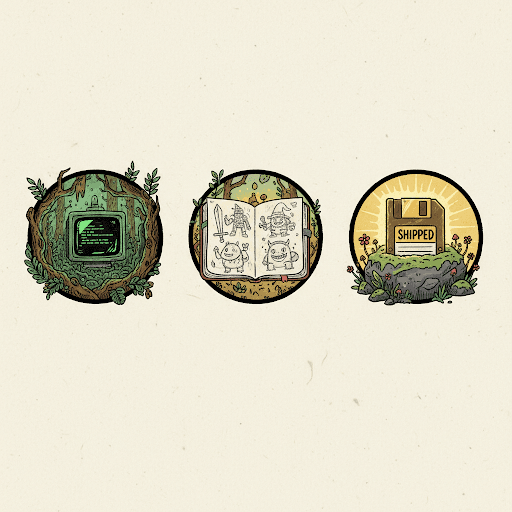
Code is only one kind of task. Project leads can turn art, audio, design, writing, QA, tooling, and production cleanup into claimable work when it helps the game ship.
See every game currently in development. Each one has a task board — code, art, audio, design, writing — with bite-sized tasks waiting to be claimed.
Pick something that fits your skills and the time you've got. Tasks are scoped to 1–4 hours. First come, first served. That's your only commitment.
Work in your own environment, on your own schedule. Stuck? Ask the project lead or the clowder in Discord. Nobody's checking if you logged hours this week.
Submit your work. The project lead reviews it against what you agreed, integrates it, and locks your name into the game's credits. Then claim another task, switch projects, or take a month off.
That's it. No standups. No sprint commitments. No team obligations. You keep your day job, your hobbies, and your sanity.
Every Clowdr project lead works from the same playbook — a set of disciplines designed to make shipping the default outcome, not the exception.
Every project's first milestone is the same: a small, playable version of the game that proves the core loop is fun. Not a demo, not a prototype — a real slice with its own art, audio, and one finished level. Until the vertical slice is real, nothing else is scoped. It's the moment the project earns the right to exist.
Scope is defined at pitch and locked in the task board from the start. New tasks get added only for genuine bugs or real gaps — not for "wouldn't it be cool if." If a lead wants to extend scope, they ship first, then extend.
Tasks are authored to fit in one sitting. Clear title, required skills, acceptance criteria, dependencies if any. If a task is bigger than four hours, it's not a task yet — it's a chunk that needs splitting.
Leads post a weekly update — progress, what's next, what's blocked. It's required, not optional. The rhythm is what keeps the clowder engaged and the project visible, even on weeks when not much gets merged.

A Steam Next Fest demo is not a second game. It is a public test of the first 15 to 30 minutes of trust: does the game launch, does the player understand the loop, does the promise on the Steam page match what they can p

A contributor handoff is the packet of context someone needs before they can do useful work on your game. For artists, composers, audio designers, and game designers, it is the difference between creative partnership and

AI arguments usually collapse into a purity test. That is useless for a game project. Clowdr needs a standard a developer, artist, composer, designer, writer, or project lead can use before AI-assisted work becomes part
Join the clowder on Discord. Browse the projects. Claim your first task. No commitments beyond the one you pick.
Join the ExpeditionFree to join. You keep the rights to your work. Every game you touch credits you by name.
Privacy choices
We use necessary storage to remember your choice. Analytics and marketing storage stay off unless you allow them. Tracking tools are not installed yet, but this choice is already wired for Google Consent Mode v2.